The reward trap
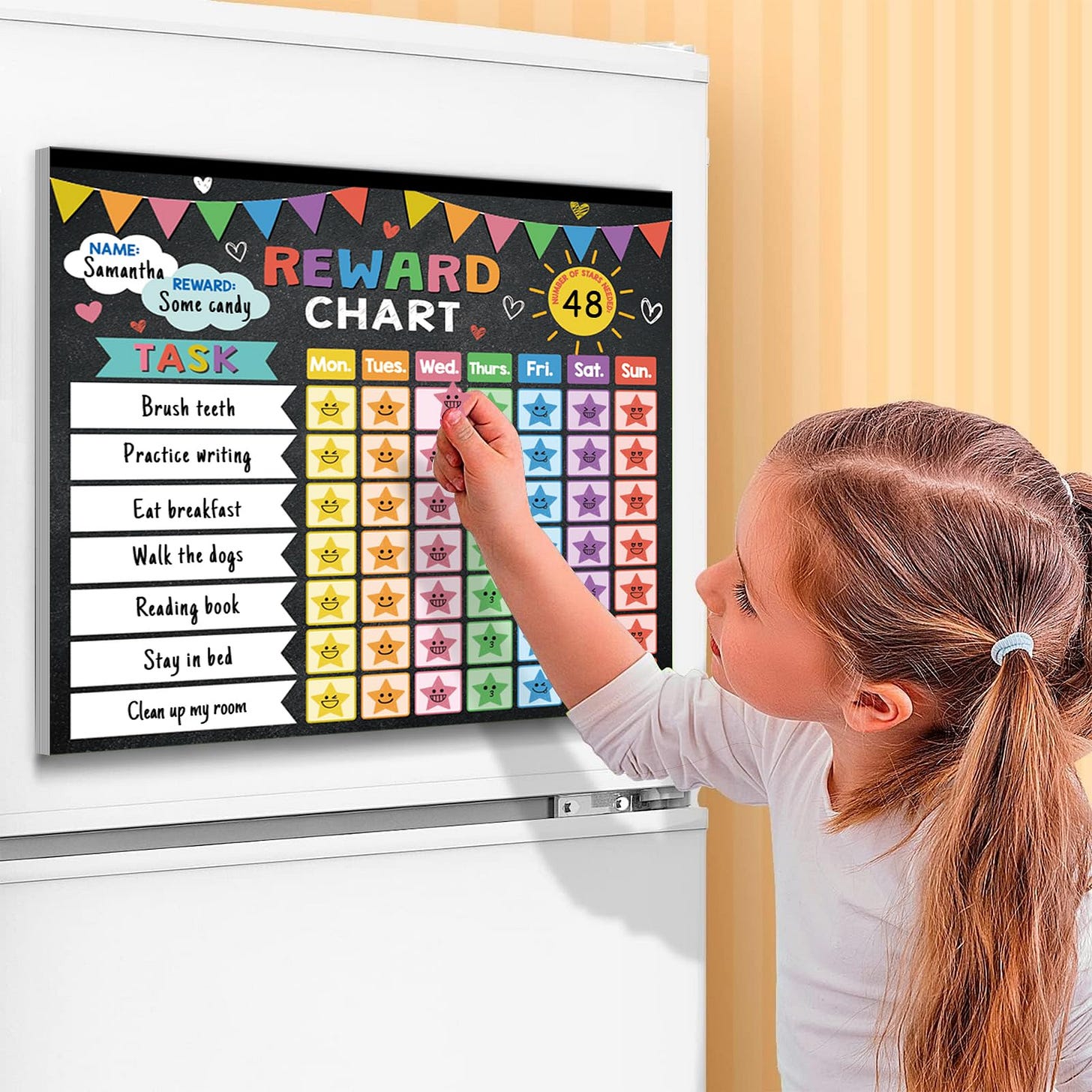
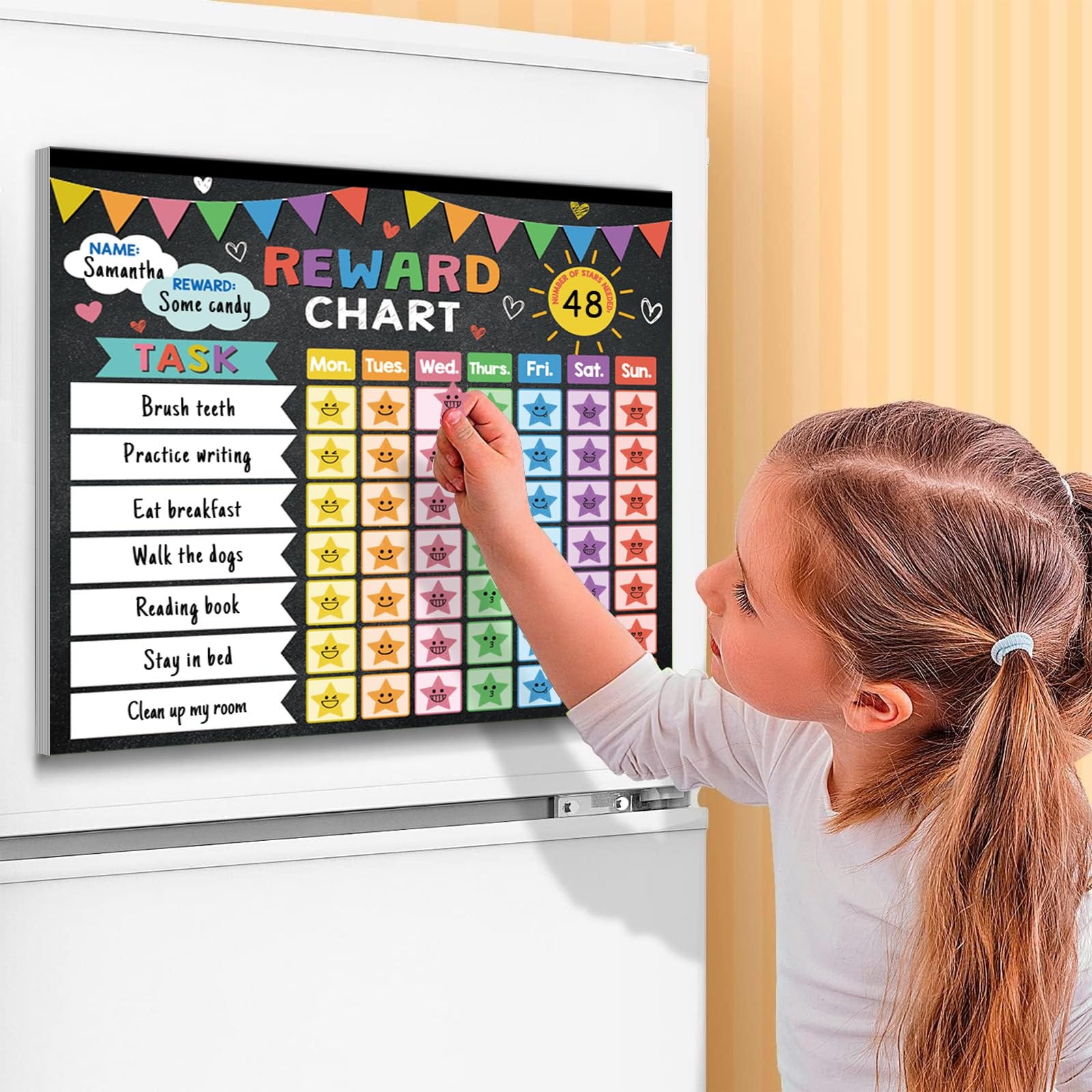
We taped the chart to the fridge on a Sunday night. Two columns, one for Margot, one for Isaac. A marker tied to a string so it wouldn’t wander. Ten stars at the top of each column, and at the top of those, a promised present.
The present was a Hot Wheels car. Just one. Hot Wheels were the entire weather of the house at that point, lined up along skirting boards, lost under the sofa, named, ranked, traded. A new one was the most concentrated unit of joy Isaac could imagine, and we knew it.
The first few days were the kind of mornings you tell other parents about. Teeth brushed without the usual three reminders. Shoes on. A hand reaching up for the marker, a star drawn carefully, both kids checking the other’s column. We felt, for maybe the first time that month, like we were doing this right. There is a particular flavour of parental satisfaction that arrives when a system you set up on Sunday is still working on Tuesday, and we were cheering about it.
It held for about a month. Heavy use at first, the marker barely had time to dry. Then it slowly degraded. Fewer stars drawn, drawn later, drawn with less ceremony. What I noticed, looking back, is that the prize had quietly taken over the frame. Every small exchange about the morning was now, underneath, an exchange about the car.
Then, at lunch one day, Isaac looked up from his plate and asked, very calmly, very precisely:
“Will I get the present if I do not shout while having lunch today?”
Let that sink for a moment, because I did, at the table, for what felt like a long time.
He wasn’t being cheeky. He was doing exactly what we had taught him to do. We had built him a small economy, and he was learning to operate inside it. He had identified a behaviour we cared about (not shouting), located its market price (some fraction of a star, presumably), and opened a negotiation. He was being rational. He was being, in his own four-year-old way, extremely competent.
And the thing that landed, slowly, over the rest of that lunch, was that he wasn’t asking the question I wanted him to be asking. He wasn’t asking should I shout at lunch. He was asking what does shouting at lunch cost. The behaviour had become a transaction, and we were the cashier.
I started noticing it everywhere after that. Stars asked for before tasks were begun. Stars negotiated mid-task (”is this worth a star?”). Stars appearing on the chart in the morning that no one remembered awarding the night before. Tasks abandoned when the star math didn’t work out. The chart hadn’t taught our kids to brush their teeth. It had taught them that brushing teeth was the price of a present, and prices, as you know, are negotiable.
There is research on this. The phrase you’ll find if you look it up is the overjustification effect. The short version is that when you attach an external reward to something a child might otherwise do for its own sake, the child reattributes their own motivation. I’m not doing this because I want to. I’m doing this because of the thing at the end. And then, when the thing at the end goes away, so does the doing. The original study (Lepper, Greene and Nisbett, 1973) was three to five-year-olds and felt-tip pens. Fifty years on, a meta-analysis of 128 experiments found the effect is robust, larger for children than for adults, and worst with the rewards we tend to set up: tangible, expected, contingent on doing the thing.
I knew none of that at the time. I just knew that my four-year-old had started pricing his own behaviour at the lunch table, and that something about that felt wrong in a way I couldn’t immediately articulate.
My wife remembers why the chart actually came down more honestly than I do. Her version is simpler, and probably the right one. The chart needed someone watching all day to award stars in the moment, and that someone was mostly her, and it wasn’t sustainable. Some evenings we’d sit down and backfill stars based on a vague sense of how the day had gone, which felt off but kept the chart alive a little longer. Eventually it wasn’t worth keeping up with. The kids hadn’t lost interest. The adult had. The system needed a cashier on duty, and there wasn’t one. I didn’t know it yet, but that was the same problem I’d later catch myself about to ship to several thousand families.
Here is the part I think about most, though.
I’d half-forgotten the chart by the time we started building Cresci. About three years had passed. The fridge had moved on, the kids had moved on, and the lunch question had settled somewhere in the back of my head where old parenting moments go to gather dust.
And then we sketched out the first version of the app, and there it was again, in a different costume. A points system. Kids would earn currency by sticking with their morning routine, and a little store where they could spend the points on things to add to their world. New stuff for the kid’s screen. It was, on paper, a good idea. Other apps did it. The mechanic was familiar. Parents would have understood it instantly.
Isaac’s lunch question is what killed it. Three years late, but it killed it.
I was sitting at my desk trying to design the store, and I caught myself building the same chart on the fridge. A more colourful version, with better animations, but structurally identical. A small economy where the task is the tax and the reward is the point. I would be shipping, to several thousand families, the exact thing I had once watched bend my own kid at the lunch table.
So we cut it. No points. No currency. No store. What’s there instead is something quieter, something that grows on its own as the kid keeps showing up, without anyone counting. I’ll write about what we built another week, because it deserves its own post and this one isn’t about the answer. It’s about the thing I had to stop building first.
The weirdest part of the whole thing, the part I still don’t have a tidy explanation for, is what happened when we took the chart down.
Nothing.
The brushing kept happening. The shoes still went on. The mornings were neither dramatically better nor dramatically worse than they had been with the chart up. It just faded. The fridge had a square of slightly less faded paint where the chart had been, and that was the only evidence we’d ever run the experiment at all.
Which makes me think, now, that the chart had never really been doing the work we thought it was. The kids had been brushing their teeth and putting on their shoes because, somewhere underneath the star economy, they actually did want to. The chart had just been very loudly taking credit for it.
If you’ve got a star chart on your fridge, I’m not telling you to take it down. I’m not even sure I would have listened to that advice while ours was still working. I’m telling you what I noticed when ours came down, in case it’s useful.
If you’ve tried this and it went differently, or the same, or weirder, I’d genuinely like to know. Reply and tell me. What happened when you stopped?
🌱 Cresci